
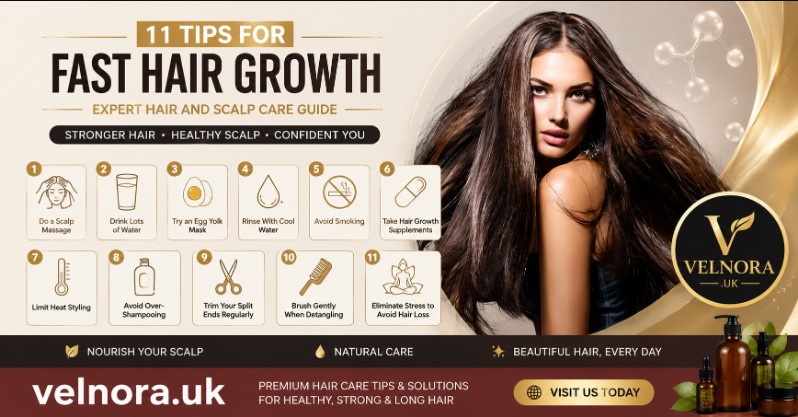
Healthy hair rarely comes from a single miracle product. It grows best when your scalp is healthy, your body gets the nutrients it needs, and your daily routine avoids unnecessary damage.
If you’ve been searching for reliable hair growth tips, you’ve probably seen everything from homemade remedies to expensive treatments promising overnight results. The truth is simpler: hair growth takes time, and no product can dramatically speed up your natural growth cycle. However, the right habits can help reduce breakage, improve scalp health, and support the conditions needed for fuller, stronger hair.
This guide explains what actually works, what doesn’t, and how to build a realistic routine based on current dermatology guidance and scientific evidence.
Understanding How Hair Grows
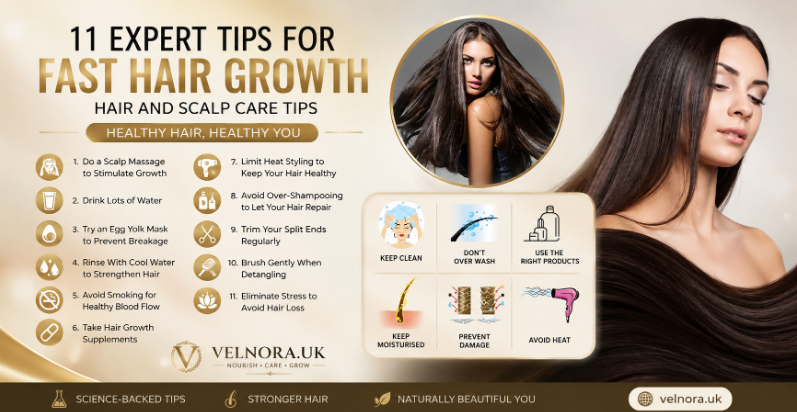
Every strand of hair follows a natural growth cycle with three main stages:
| Growth Stage | What Happens | Typical Duration |
|---|---|---|
| Anagen | Active growth phase | 2–7 years |
| Catagen | Transition phase | 2–3 weeks |
| Telogen | Resting and shedding phase | Around 3 months |
Most healthy people lose around 50 to 100 hairs per day, which is completely normal. New hairs usually replace those that shed.
Because hair grows approximately 0.5 inch (1.25 cm) per month on average, visible improvements often take several months rather than weeks.
Also Read: Austin Butler Girlfriend: His Dating History and Current Relationship
Why Hair May Grow More Slowly
Hair growth can be affected by many factors, including:
- Genetics
- Aging
- Hormonal changes
- Stress
- Poor nutrition
- Certain medications
- Scalp conditions
- Heat and chemical damage
- Tight hairstyles
If sudden or severe hair loss develops, it’s important to speak with a healthcare professional rather than relying on internet remedies.
Eat for Healthy Hair
Hair is made primarily of keratin, a protein. Your body needs adequate nutrition before it can prioritize healthy hair growth.
Protein Matters
Low protein intake may contribute to weaker hair.
Good sources include:
- Eggs
- Fish
- Chicken
- Greek yogurt
- Beans
- Lentils
- Tofu
- Lean beef
Important Vitamins and Minerals
Several nutrients play a role in maintaining healthy hair.
| Nutrient | Why It’s Important | Food Sources |
|---|---|---|
| Iron | Supports oxygen delivery | Spinach, red meat, beans |
| Zinc | Helps tissue repair | Pumpkin seeds, seafood |
| Vitamin D | Supports normal hair follicle function | Fatty fish, fortified foods |
| Biotin | Helps normal metabolism | Eggs, nuts |
| Omega-3 fats | Support scalp health | Salmon, walnuts |
| Vitamin C | Helps collagen production and iron absorption | Citrus fruits, berries |
Unless a deficiency exists, taking high-dose supplements usually does not make hair grow faster. Blood tests may help identify deficiencies when recommended by a healthcare provider.
Take Care of Your Scalp
Healthy hair starts with healthy skin.
Keep the scalp clean
Wash often enough to remove excess oil, sweat, and product buildup while avoiding excessive dryness.
Massage the scalp
A gentle scalp massage for several minutes may improve circulation and feels relaxing. While evidence is limited, some small studies suggest regular massage may slightly increase hair thickness over time.
Treat dandruff promptly
Persistent flakes, itching, or inflammation should not be ignored. Conditions such as seborrheic dermatitis can affect scalp comfort and may contribute to increased shedding.
Be Gentle With Wet Hair
Hair is more fragile when wet.
Instead of aggressive rubbing:
- Pat dry with a soft towel.
- Use a wide-tooth comb.
- Start detangling from the ends.
- Avoid pulling through knots.
Small changes like these reduce unnecessary breakage.
Reduce Heat Damage
Frequent use of hot styling tools weakens hair over time.
Try these habits:
- Lower the temperature setting.
- Always use a heat protectant.
- Let hair air-dry whenever possible.
- Limit straightening and curling sessions.
Healthy-looking hair often comes from preventing damage rather than repairing it afterward.
Choose Hairstyles That Protect Hair
Very tight hairstyles may place constant tension on hair follicles.
Examples include:
- Tight ponytails
- Tight braids
- Heavy extensions
- Tight buns
Switching to looser styles helps reduce stress on the scalp.
Pick Hair Products Carefully
Not every expensive product delivers better results.
Look for shampoos and conditioners that match your hair type.
For example:
| Hair Type | Recommended Products |
|---|---|
| Dry hair | Moisturizing shampoo and conditioner |
| Oily hair | Lightweight balancing formulas |
| Curly hair | Sulfate-free moisturizing products |
| Color-treated hair | Color-safe products |
Avoid products that make unrealistic promises like “grow inches overnight.”
Manage Everyday Stress
Stress affects many body systems, including hair.
Major life events, illness, surgery, or emotional stress can trigger temporary shedding known as telogen effluvium.
Helpful stress-management habits include:
- Regular exercise
- Good sleep
- Meditation
- Deep breathing
- Spending time outdoors
- Talking with supportive friends or family
Hair often returns to normal once the underlying stress improves, although recovery can take several months.
Medical Treatments That Have Evidence
Some treatments have stronger scientific support than others.
Minoxidil
Over-the-counter topical minoxidil has been studied extensively for certain types of hair loss.
It may help some people maintain or regrow hair when used consistently. Results usually require several months, and stopping treatment often leads to gradual loss of benefits.
Consult a healthcare provider if you’re unsure whether it’s appropriate for you.
Prescription Options
Depending on the cause of hair loss, a dermatologist may recommend:
- Prescription medications
- Treatment for hormonal conditions
- Iron replacement if deficient
- Management of thyroid disease
- Corticosteroids for certain autoimmune conditions
The right treatment depends on the underlying diagnosis.
Popular Remedies: What Does the Evidence Say?
Many natural remedies are widely discussed online.
Here’s a balanced overview.
| Remedy | Current Evidence |
|---|---|
| Rosemary oil | Some small studies suggest possible benefits comparable to low-strength minoxidil in certain cases, but more research is needed. |
| Coconut oil | Helps reduce protein loss and protects hair from damage rather than increasing growth speed. |
| Castor oil | No strong scientific evidence that it speeds hair growth. |
| Onion juice | Limited small studies exist, but evidence remains weak. |
| Aloe vera | May soothe the scalp but has little evidence for stimulating growth. |
Natural does not always mean effective—or safe. Some ingredients can cause allergic reactions or irritation.
Lifestyle Habits That Make a Difference
Healthy hair reflects overall health.
Focus on:
- Sleeping 7–9 hours each night
- Staying hydrated
- Eating balanced meals
- Exercising regularly
- Avoiding smoking
- Limiting unnecessary chemical treatments
These habits support your body as a whole, including your hair.
Myths Worth Leaving Behind
Myth: Cutting hair makes it grow faster.
False. Hair grows from follicles beneath the scalp, not from the ends.
Myth: Brushing 100 strokes every day helps.
Excessive brushing may actually increase breakage.
Myth: Shampoo causes hair loss.
Normal washing removes hairs already in the shedding phase. It doesn’t create new hair loss.
Myth: More supplements equal faster growth.
Too much of certain vitamins—especially vitamin A—can actually contribute to hair loss.
When to See a Dermatologist
Professional evaluation is recommended if you notice:
- Sudden heavy shedding
- Bald patches
- Persistent scalp pain or itching
- Hair loss after starting a medication
- Hair thinning with fatigue or unexplained weight changes
- Hair loss lasting longer than several months
Early diagnosis often provides more treatment options.
Building a Realistic Hair Care Routine
Instead of chasing viral trends, keep your routine simple and consistent.
Morning:
- Protect hair from unnecessary heat.
- Avoid overly tight hairstyles.
Throughout the day:
- Eat balanced meals.
- Stay hydrated.
Evening:
- Gently detangle.
- Cleanse the scalp when needed.
- Apply treatments consistently if recommended.
Consistency usually produces better long-term results than constantly switching products.
Conclusion
Healthy hair is built through steady care rather than quick fixes. The most effective approach combines good nutrition, gentle hair care, scalp health, stress management, and evidence-based treatments when appropriate.
While many products promise dramatic transformations, realistic expectations are important. Hair grows gradually, and noticeable improvements often take several months. By focusing on proven habits instead of marketing claims, you can create the best environment for stronger, healthier hair over time.
FAQs
1. What are the best hair growth tips for everyday care?
Focus on eating enough protein, maintaining a healthy scalp, avoiding excessive heat styling, reducing breakage, managing stress, and treating any medical conditions that may contribute to hair loss.
2. Can shampoo make hair grow faster?
No. Shampoo keeps the scalp clean but does not significantly increase the rate of hair growth.
3. Is biotin good for everyone?
Biotin helps people with a true deficiency, but most healthy individuals don’t see additional hair growth from taking extra biotin.
4. How long does it take to notice improvement?
Because hair grows slowly, meaningful changes often take three to six months of consistent care.
5. Does stress really cause hair loss?
Yes. Significant physical or emotional stress can trigger temporary shedding, though hair often recovers after the underlying cause improves.
6. Should I use natural oils?
Some oils, such as coconut oil, can reduce hair damage, while rosemary oil shows promising but still limited evidence. Natural remedies should not replace medical treatment when hair loss has an underlying health cause.
For more articles and updates, visit: VELNORA